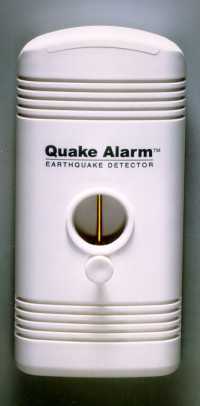
 Click on this Quake Alarm and you will link to a doc. from the Office of Energency Services, in Chile; concerning the Quake Alarm. Click on this Quake Alarm and you will link to a doc. from the Office of Energency Services, in Chile; concerning the Quake Alarm.

Thompson Lang
'the 911 monster'

villains
versus
heros
Mesothelioma victims click on the asbestos sign, for help
|
| |
 |
ARTI OP1 |
 |
Operational Membership Background Information Before you decide that you
might like to become an Operational member of the American Rescue
Team we would like you to consider some important points. Persons
who come to assist victims of a major disaster often experience traumatic
exposure to death, destruction and loss compounded by dislocation.
In the course of your duties as a
rescue worker in a major disaster you will empathetically share,
through identification, the painful emotional burdens the disaster has
brought which could result in your becoming one of the "hidden
victims".
The absolute horror of
rescue work performed by the American Rescue Team International during a
major disaster is so devastating that of 100 new rescuers there
might be only one that will return for the next disaster. Many
rescuers will be so changed that they cannot relate to anything
they have known before. Some will experience no problems at work or home
as a result of the work assignment.
In massive death situations,
there may be few differences between the stress reactions of surviving
victims and the secondary stress experienced by crisis workers. Among the highest
ranked stress causes for rescuers are "situations where children
have been killed," "rescue where bodies or body parts are
uncovered," "interviewing survivors of a collapsed building
where members of their family have died in the disaster."
Of those rescued from the
earthquake in Kobe, Japan, 56 have taken their own lives since the
disaster. By joining the American Rescue Team International there is a strong
possibility that secondary traumatic stress reactions will cause some
rescuers to take their own lives as a result of what they have seen. We
cannot stress this point enough ! !
Although programs
have been developed for helping rescue workers and public safety
employees with distress associated with smaller incidents, there currently
exists no specific programs for intervention and prevention of distress
which you may experience in a major disaster.
Symptoms you may experience after a Major Disaster |
|
|
|
A rescuers age, number of incidents
attended, number of years performing rescue work, exposure to sights and
smells of a major disaster scene and other variables have not shown
any statistically significant relationships between these variables and
development of physical or mental disorder or symptoms of disorders. There
is no glory in what we do! There is only everlasting horror!
It is not unusual, months and even years after a major disaster, for
rescuers to hear screams and panic-stricken outcries from trapped victims
facing their own deaths.
There is, however, the
satisfaction of having been able to make a difference if you have the
"right stuff" and no amount of training in the world will give
you this, you either have it or you do not. Most of our team members
indicate that they are not "afraid of dying" due to any reason
while on scene, while a few have indicated fear of death on scene. A few
team members have reported that their lives had been improved after a
major disaster.
If you want to know, "What
effect will rescue at a major disaster have on my life?"
We cannot say, but we do
know that it will hurt!
Coping
We asked team members where they
received the "most valuable support" while in the city of the
accident. Nearly 70% identified "peers and co-workers," while
other responses included "family and friends" and individual
coping techniques. Seventy-seven percent indicated that the "most
valuable support" upon returning home was "family and
friends," "peers and co-workers."
If you need it you will not
receive mental health support in the area of the disaster. If you have ever
had "alcohol, drug, or emotional problems" be honest with
yourself before you commit to joining the team. Your fellow rescue
team members and the lives of those in peril will be dependant on
you. We thank you for considering ARTI Operational Membership and trust
that you will make the right decision.
|
|
Return to the top
Main
Site Map
Credentials
Knowledge
xxxx
Triangle Of Life
xxxx
Videos
ARTI Store
The American Rescue Team International
PO Box 237, 236 West Portal Ave, San Francisco, CA, 94127, USA
Tel 1-415-533-2231
Email: amerrescue@aol.com
© ARTI,Available to those who support our humanitarian work and standing up to those who defamed us for revenge. ARTI endorses the triangle of life and scorn those who endanger children's lives by promoting 'duck and cover.
Doug Copp, Home address: 563 Charlote St, Sydney, Nova Scotia, Canada, B1P-1E6, Home Phone 1-902-567-1227,Personal Email: amerrescue@aol.com, 1985 - 2005 All rights reserved. Reproduction or use in whole or
in part without the express permission of the copyright holder is strictly
forbidden. Just ask!!
American Rescue Team International is a 501(c)3 not for profit organization. Organized and duly constituted under the laws of the State of California since 1985. At international disasters we were called the `American Rescue Team' because we were the only Americans saving lives at foreign disasters, the name stuck!
Site maintained by ARTI
For any questions regarding this website please email
webmaster@amerrescue.org
|
|
|